

Cigarettes are not a sudden product of modern society; they have a long and complex history of human use. From the earliest tobacco rituals to the emergence of industrialized cigarettes, and to today’s emphasis on style, culture, and expression by consumers, the form of cigarettes themselves has constantly changed, and cigarette boxes, as their “external expression,” have also continued to evolve.
I. who invented cigarettes the Origin of Cigarettes: From Plant to Consumer Product
The use of tobacco can be traced back to Native American societies. Initially, tobacco was not a daily consumer product but a plant with ritualistic and symbolic significance. With the advent of the Age of Exploration, tobacco was brought to Europe and gradually evolved from religious and social uses into a mass-market product.
The true “cigarette” was born during the industrialization process. When tobacco was shredded, rolled, and mass-produced, cigarettes were no longer just the contents themselves, but required convenient, portable, and identifiable packaging—thus, the cigarette box was born.
II. who invented cigarettes Early Cigarette Boxes: Functionality Over Aesthetics
In the early days of cigarettes, the core functions of cigarette boxes were very clear:
Protecting cigarettes from crushing
Providing moisture and protection from breakage
Making them easy to carry
Early cigarette boxes were mostly uniformly sized, simple-structured paper packaging. The design focus was on brand names and basic identification, with little emphasis on stylistic variations or visual style.
However, as market competition intensified, cigarette boxes began to take on more roles.
III. who invented cigarettes From “Containers of Cigarettes” to “Expression”: The Transformation of the Cigarette Packet’s Role
As cigarettes gradually became part of social culture, cigarette packs ceased to be merely containers, becoming:
A symbol of status and taste
An extension of brand culture
A visual symbol in social settings
It was during this stage that the shape, size, and opening method of paper cigarette packs began to differentiate. Different countries and different brands gradually developed their own unique packaging languages.
IV. who invented cigarettes Why are Paper Cigarette Boxes Still the Mainstream Choice?
Despite the continuous development of packaging materials, paper cigarette boxes still dominate the market for the following reasons:
Flexible Structure:** Paper is suitable for folding, die-cutting, and multi-structural combinations, enabling diverse designs.
Strong Printability:** Paper can beautifully reproduce patterns, text, and special processes.
High Balance Between Cost and Customizat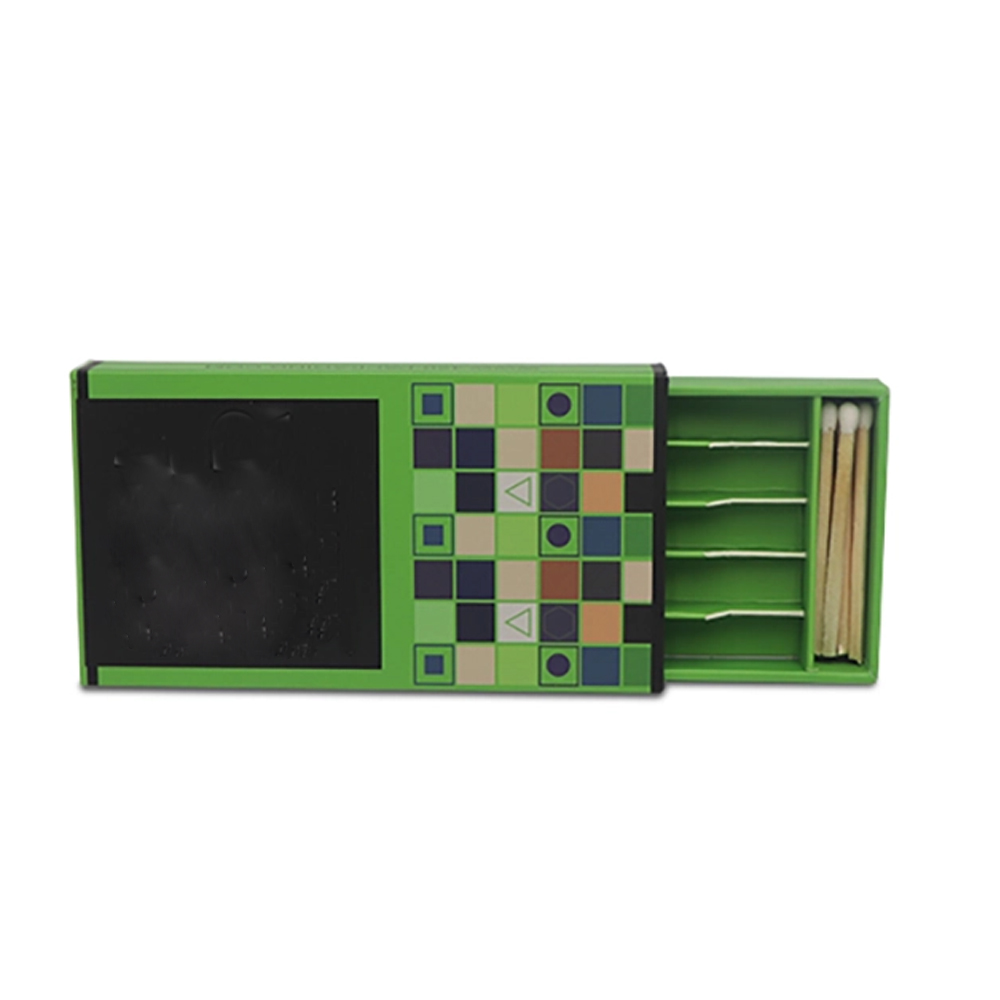 ion:** It is suitable for both mass production and small-batch personalized customization.
This provides the foundation for designs in “different shapes and sizes.”
V. who invented cigarettes How Do Different Shaped Paper Cigarette Boxes Tell Different Stories?
1. Classic Upright Box: Heritage and Stability
The upright rectangular cigarette box remains the most common form, conveying:
Tradition, Stability, Familiarity
This box shape is suitable for brands that emphasize history, craftsmanship, and continuity.
2. Innovative Shaped Boxes: Breaking Conventions for Individual Expression
In recent years, more and more brands have begun experimenting with:
Flat boxes
Rounded corner boxes
Drawer-style structures
Multi-tiered unfolding cigarette cases
These designs make the cigarette case itself a “memorable object,” reinforcing brand impression visually and in terms of user experience.
VI. who invented cigarettes Size Variation: More Than Just How Many Cigarettes It Holds
Changes in cigarette case size are often closely related to brand strategy:
Small cigarette cases: Emphasizing lightweight, portability, and restraint, suitable for lifestyle or scenario-based use.
Larger cigarette cases: More often used for collectible, commemorative, or culturally themed series, highlighting design and content value.
Size itself has become a language of brand communication.

VII. who invented cigarettes Design Trends in Personalized Paper Cigarette Packs
In today’s market environment, personalization no longer means complexity, but rather emphasizes “attitude”:
Minimalist color schemes and white space design
Tactile differences brought by specialty papers
Subtle techniques such as partial embossing and debossing
Structural ingenuity rather than visual clutter
These elements combine to allow paper cigarette packs to showcase a unique style without being overly extravagant.
VIII. who invented cigarettes Between History and Future, Cigarette Packs Continue to Evolve
From the origins of cigarettes to modern packaging design, we can see a clear trend: Content is changing, culture is changing, and the meaning of packaging is also changing.
Post time: Jan-13-2026