

As public concern grows regarding the carcinogenicity of e-cigarettes and their safety compared to traditional cigarettes, the tobacco and related industries are facing unprecedented changes in public opinion and regulatory environment. Against this backdrop, paper cigarette pack design is no longer merely a packaging container, but is gradually evolving into a comprehensive carrier of brand attitude, health philosophy, and personalized expression.
I. do e cigarettes cause cancer Rising Health Awareness is Reshaping the Tobacco and E-cigarette Industries
In recent years, discussions surrounding questions such as “Does e-cigarette pose a cancer risk?”, “Does long-term vapor inhalation damage the lungs?”, and “Are they truly less harmful than traditional cigarettes?” have intensified. Despite differing opinions within and outside the industry, one thing is certain:
Consumers are significantly more sensitive to health risks.
Younger consumers are paying more attention to ingredient transparency, usage frequency, and alternatives.
Quitting smoking, harm reduction, and controlling usage have become frequently used keywords.
In this environment, packaging is no longer a neutral shell, but rather the first “information interface” consumers encounter with the product. A well-designed paper cigarette box can often silently convey a brand’s stance on health, responsibility, and aesthetics.
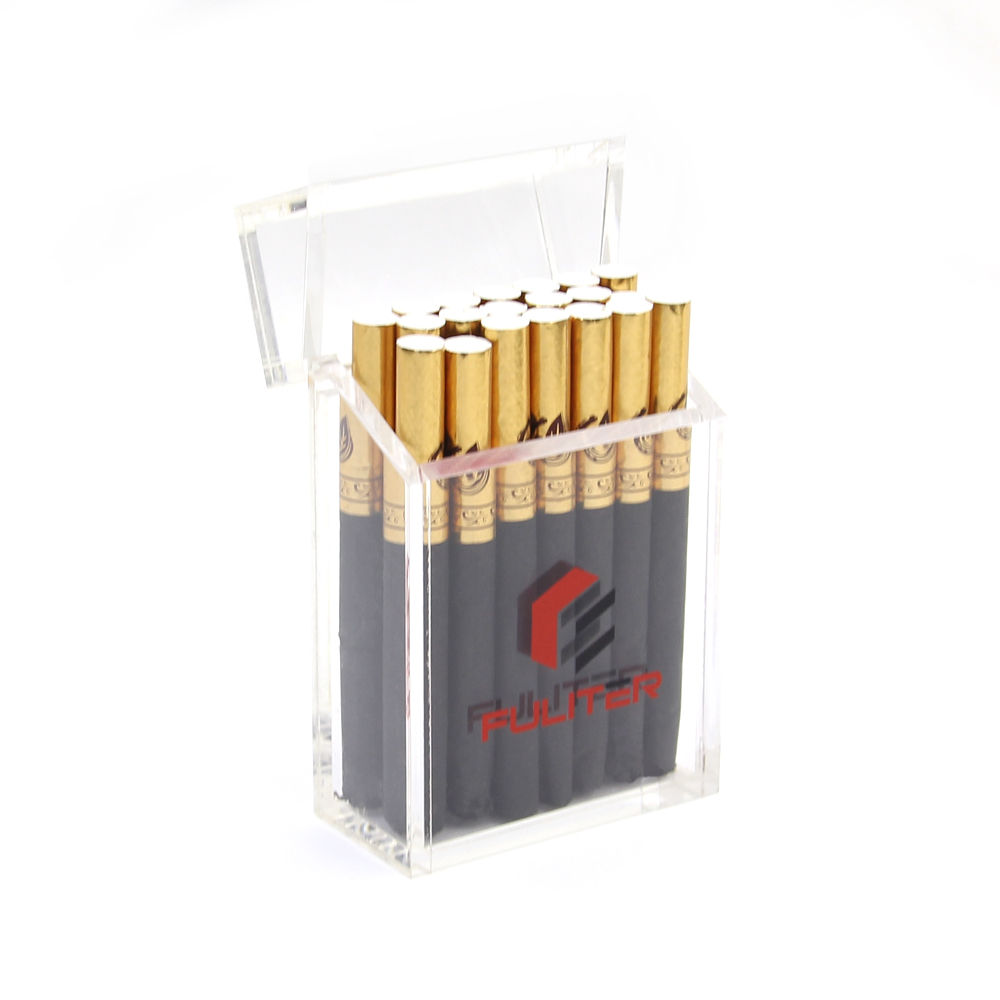
II. do e cigarettes cause cancer: Why are paper cigarette boxes a key entry point for brand upgrading?
Compared to plastic or metal packaging, paper cigarette boxes currently offer significant advantages:
Stronger environmental attributes: Recyclable and biodegradable paper materials are easier to integrate with the concepts of “harm reduction” and “sustainability.”
Higher design flexibility: Paper offers vast possibilities for variation in structure, folding methods, and surface finishes.
Easier to achieve small-batch customization: Suitable for brands to create limited editions, themed designs, or market tests.
For these reasons, more and more brands are focusing on the shape, size, and structure of their cigarette boxes to break free from homogeneous competition.
III. do e cigarettes cause cancer:How can different shapes of paper cigarette boxes enhance personalized style?
1. Non-standard cuboid structure: Breaking with traditional perceptions
Traditional cigarette boxes are mostly standard cuboids, but many brands are now experimenting with:
Rounded corner boxes
Flat square boxes
Drawer-style structure
Flip-top + magnetic combination structure
This change not only enhances visual memorability but also gives consumers a stronger sense of ritual when “opening the cigarette box.”
2. Modular Structural Design: Serving Different Usage Scenarios
Amidst ongoing health controversies, some brands emphasize “controlling usage,” thus adopting the following structural approaches:
Using compartmentalized cigarette boxes
Limiting the number of cigarettes taken at one time through internal partitions
Combining this with textual or graphic prompts
The structure itself becomes a form of “behavioral guidance,” a significant trend in modern packaging design.
IV. do e cigarettes cause cancer  sychological Hints and Market Strategies Behind Size Changes
1. Small Cigarette Packs: Restraint, Rationality, and Lightweight Design
Small-sized paper cigarette packs often convey:
Infrequent use
Carry-on
A light-burden lifestyle
This type of design is particularly common in products that emphasize “substitution,” “transition,” and “reduced dependence.”
2. Larger Cigarette Packs: Collectibility and Brand Culture Expression
Conversely, some limited-edition or culturally collaborative products employ:
Taller or wider packs
Thicker cardboard
More complex opening mechanisms
The aim is not to encourage frequent use, but rather to transform the cigarette pack itself into a collectible design piece.

V. Visual and Tactile Experience: Making Paper Cigarette Packs a “Medium of Expression”
In a market environment where content is highly homogenized, tactile experience and detailed design become crucial differentiators:
Specialty papers (cotton paper, tactile paper, recycled paper)
Partial embossing and debossing techniques
Contrast between matte and glossy finishes
Minimalist color schemes and white space design
These elements work together to allow cigarette packs to convey brand attitude without relying on exaggerated images.
VI. do e cigarettes cause cancer:Moving Forward Amidst Controversy: The Long-Term Value of Personalized Packaging
Undeniably, the industry, whether traditional cigarettes or e-cigarettes, is constantly embroiled in health discussions and policy changes. However, it is precisely in this environment that responsible, well-designed, and attitude-driven paper cigarette pack packaging is more likely to gain consumer recognition.
Through the design of paper cigarette packs in different shapes and sizes, brands are not only “selling products,” but also:
Conveying values
Building trust
Shaping a long-term brand image
Post time: Jan-05-2026