

Cigarette box printing not only affects the appearance quality of the packaging but also influences the structural performance, production efficiency, and finished product consistency. For packaging manufacturers, choosing the appropriate cigarette box printing method requires comprehensive consideration of paper characteristics, printing precision, production volume, post-processing techniques, and the regulatory requirements of the target market. Under the premise of complying with relevant laws and regulations, a reasonable combination of printing technologies and processes can achieve stable and standardized packaging production.
Different printing methods have their own advantages and are suitable for different production needs.
1. Offset Printing: Suitable for Fine Graphic Printing
Offset printing has good image and text reproduction capabilities, capable of presenting clear text, delicate lines, and rich color gradations, suitable for paper packaging with high printing precision requirements. By controlling ink usage, printing pressure, and registration accuracy, batch-to-batch quality stability can be improved.
2. Gravure Printing: Suitable for Mass Production
Gravure printing is suitable for some high-volume packaging printing projects, offering good production efficiency and color performance. However, the plate-making cost, material compatibility, and specific production requirements need to be assessed in advance, and its applicability depends on the order size.
3. Digital Printing: Suitable for Small-Batch Prototyping
Digital printing reduces traditional plate-making steps, making it suitable for sample production, small-batch orders, and printing tests of different versions. For projects requiring frequent file adjustments, this method can improve early-stage verification efficiency.
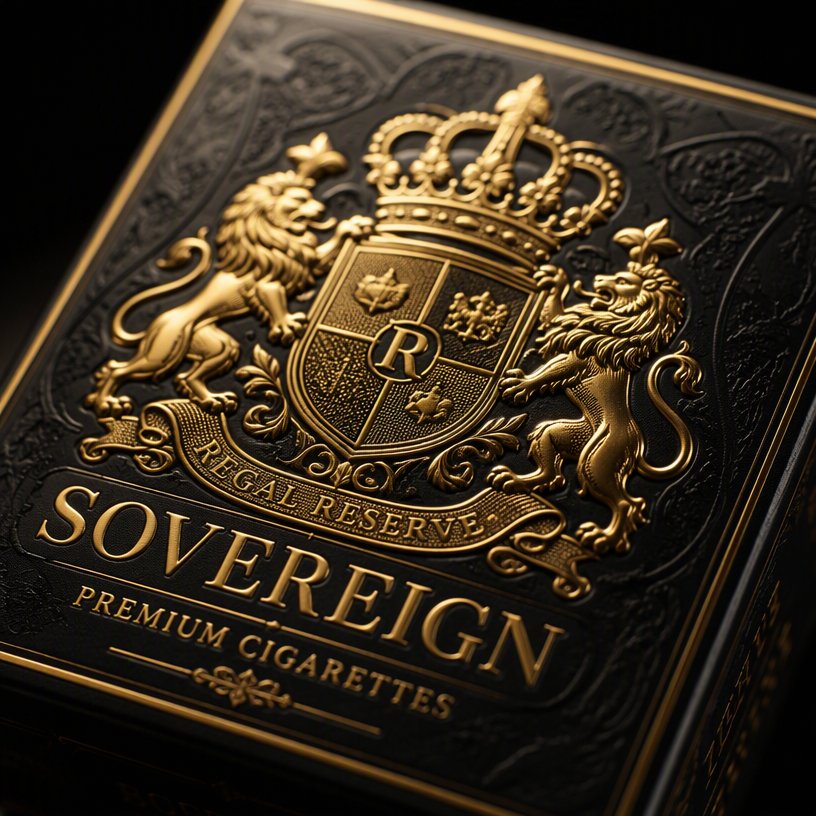
Packaging differentiation depends not only on printing colors but also on paper texture, graphic accuracy, structural design, and processing details.
First, appropriate paper should be selected based on the packaging structure, with a focus on checking paper stiffness, surface flatness, and folding performance. Second, during the pre-press design stage, ensure accurate settings for text, graphics, bleed, and die-cut lines to avoid issues such as text misalignment and white edges in the finished product.
Within permissible regulations, different material textures can be created through embossing, varnishing, or other applicable surface treatments. However, tobacco packaging is strictly regulated, and any decorative processes must comply with the target market's regulations regarding packaging appearance, health warnings, and related information display.

When choosing a printing process, consider three aspects:
First, assess the order quantity. For small-batch orders, prioritize comparing the overall cost of digital printing versus traditional printing; for large-batch orders, calculate costs based on plate-making fees, equipment efficiency, and material waste.
Second, confirm the packaging materials. Different papers have varying ink absorption properties, surface coatings, and folding characteristics, requiring proofing to verify the printing effect and subsequent processing performance.
Third, establish quality acceptance standards. Focus on checking color deviation, registration accuracy, text clarity, die-cutting dimensions, and box

Effective cost control should be built upon stable production quality. Optimizing layout and paper utilization, rationally scheduling production batches, and reducing unnecessary process changes can reduce material waste and the cost of rework.
Simultaneously, final documents and samples should be confirmed before printing, sampling inspections should be conducted during production, and the appearance, dimensions, and structural quality should be checked again at the finished product stage. For orders involving multiple processing stages, the quality responsibilities for each stage should be clearly defined to reduce rework caused by insufficient communication.

The printing content and appearance requirements for tobacco packaging vary depending on the sales region. Health warnings, warning images, font sizes, packaging colors, and brand displays may all be subject to legal restrictions. Therefore, before starting design and printing, the latest regulations of the target market should be verified, and all documents and production samples should be ensured to undergo the necessary compliance reviews.
Common printing methods for cigarette boxes include offset printing, gravure printing, flexographic printing, and digital printing. Offset printing is suitable for intricate designs and rich colors; gravure printing is suitable for mass production; flexographic printing is suitable for some packaging materials; and digital printing is suitable for small-batch, multi-style printing needs
The choice should be based on the order quantity, paper type, design complexity, budget, and quality requirements. For large-volume orders, offset or gravure printing can be evaluated; for small-batch proofing, digital printing can be considered. The final result needs to be confirmed through proofing.
Common materials include white cardboard, special packaging cardboard, and composite paperboard. When selecting, consider the paper's stiffness, surface smoothness, folding performance, and subsequent processing requirements, and ensure that the material complies with applicable packaging regulations.
Pre-press document inspection, color management, resolution control, and printing proofing should be carried out. The registration accuracy, text clarity, color difference, and surface defects should be checked to ensure stable mass production results.
Post time: Oct-13-2026