
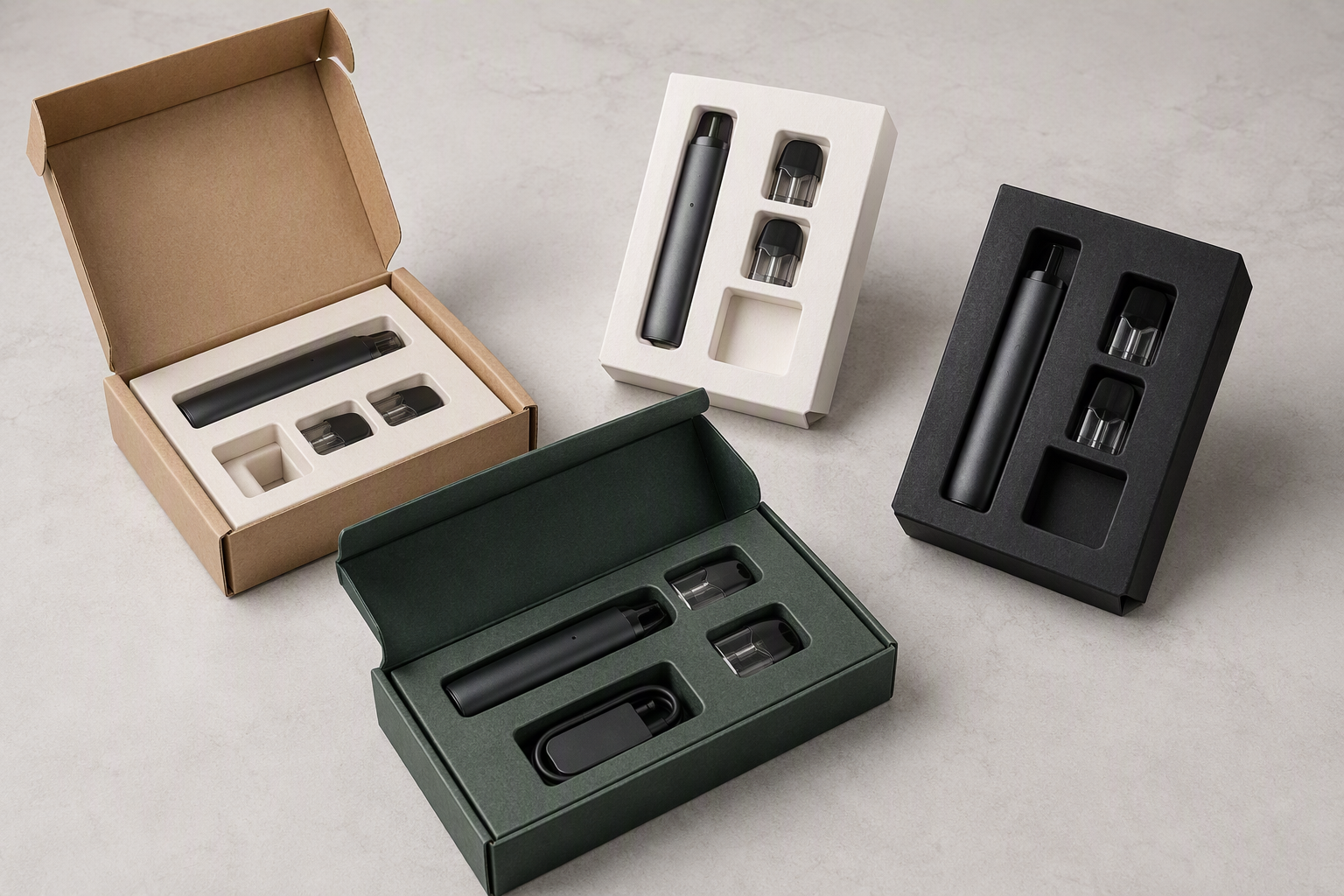
Vape packaging inserts play an important role in protecting products, organizing accessories, and creating a professional unboxing experience. For vape brands, distributors, and private-label businesses, choosing the right insert is just as important as selecting the outer packaging box. A well-designed insert keeps products securely positioned, reduces unnecessary movement during transportation, and helps present every component neatly.
As a custom packaging manufacturer, WellPaperBox provides tailored paper box packaging solutions for businesses seeking distinctive designs, practical structures, and reliable production. Whether you need inserts for vape devices, cartridge packaging, or multi-component product kits, the right design can improve both packaging performance and brand presentation.
In this guide, we explain the different types of vape packaging inserts, suitable materials, key design considerations, and how to work with a custom packaging manufacturer.
Vape packaging inserts are internal trays, dividers, or supports placed inside a packaging box to hold products in designated positions. They are designed around the dimensions and shape of the packaged components.
Unlike ordinary void filling, a custom insert creates a structured interior that helps prevent products from shifting, colliding, or becoming scratched during handling and shipping.
Common applications include:
Vape device boxes
Vape cartridge packaging
E-cigarette accessory boxes
Multi-component packaging kits
Retail display and presentation boxes
The appropriate insert depends on the product dimensions, packaging structure, protection requirements, and target budget.
1. Protect Products During Shipping
Products can move inside an oversized box during transportation. A properly fitted insert helps hold components in place and reduces the risk of scratches, impact damage, and packaging disorganization.
For heavier devices or fragile components, the insert should be designed with suitable material thickness, cushioning, and structural support.
2. Improve Product Organization
Custom inserts can provide separate compartments for different components. This is particularly useful when a package contains a device and several accessories.
Each item has a designated position, making the packaging easier to assemble, inspect, and unpack.
3. Enhance Brand Presentation
The inside of a box is part of the overall brand experience. A neatly arranged insert, coordinated colors, and a clean interior layout can make packaging look more professional.
Brands can combine custom inserts with printed paper boxes, premium finishes, and consistent visual branding to create a cohesive packaging solution.
4. Support Efficient Packaging Operations
A properly engineered insert can simplify manual or automated packing by giving each component a defined location. Flat-shipped paper inserts may also help reduce storage requirements before assembly, depending on the design.
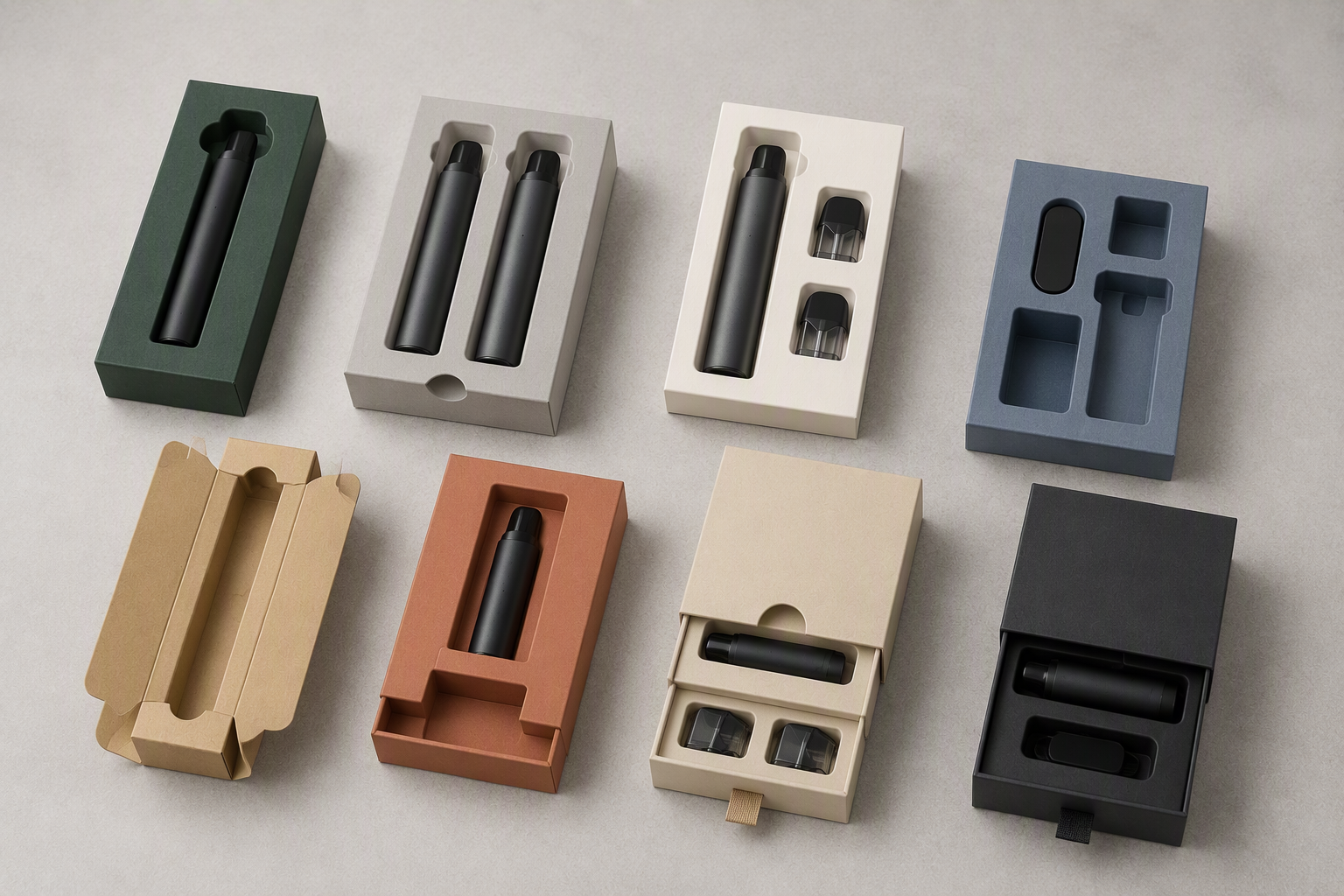
Different insert materials offer different advantages. The best choice depends on the required level of protection, appearance, environmental considerations, and production cost.
1. Cardboard Vape Packaging Inserts
Cardboard inserts are a practical option for brands looking for lightweight, customizable packaging interiors.
They can be die-cut and folded into specific shapes to hold products securely. Paperboard inserts are especially suitable for custom paper boxes and coordinated packaging designs.
Advantages:
Customizable shapes and compartment layouts
Lightweight construction
Easy integration with paper packaging
Suitable for printed or unprinted designs
Potentially recyclable, depending on material composition and local recycling facilities
Cardboard inserts are a strong option when the packaging concept prioritizes paper-based materials and efficient shipping.
2. Foam Vape Packaging Inserts
Foam inserts are commonly used when additional cushioning or a close-fitting cavity is required.
Depending on the product and application, options may include EVA or EPE foam. The material should be selected according to the component's weight, fragility, and protection requirements.
Advantages:
Custom-shaped cavities
Cushioning for delicate components
Neat presentation for individual items
Flexible design possibilities
However, foam inserts may increase material costs and may not fit every brand's sustainability objectives. Material compatibility should be evaluated before ordering.
3. Corrugated Inserts
Corrugated inserts feature a fluted structure that can provide additional rigidity and cushioning.
They can be suitable for shipping cartons, larger packaging formats, and products that require extra internal support.
Their thickness and structural design should be matched to the product weight and expected shipping conditions.
4. Custom Die-Cut Paperboard Trays
Die-cut trays are designed to match the shape and arrangement of packaged components. Depending on the construction, they can include multiple cavities, folded supports, and dividers.
They are useful for creating an organized interior while maintaining a consistent paper-based packaging appearance.
When choosing between a flat insert, folded tray, and foam cavity, compare product fit, assembly requirements, material usage, and the total packaging cost.
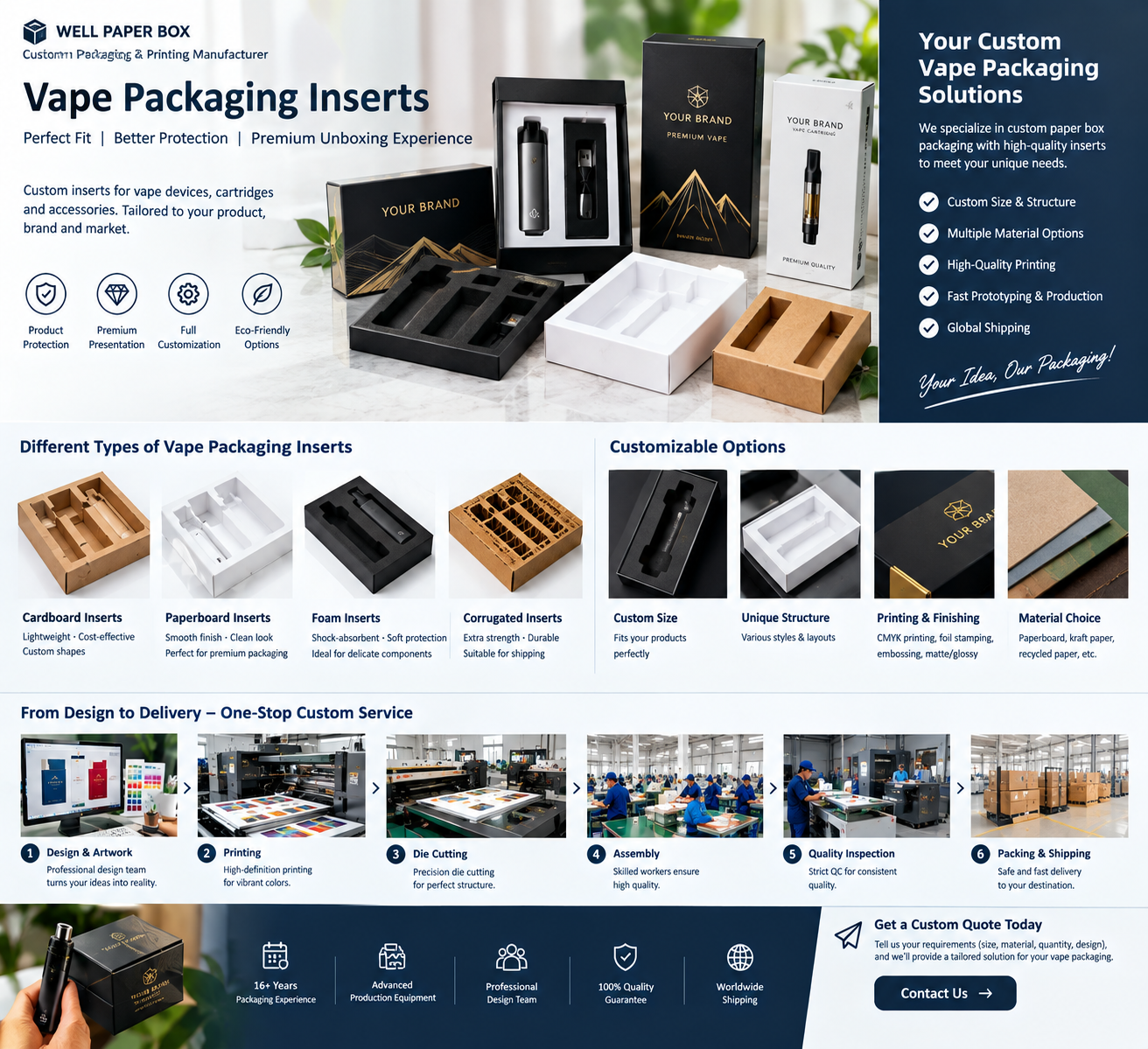
Selecting the right insert requires more than comparing material prices.
Product Dimensions and Weight
Measure the length, width, height, and weight of each component. Include any protruding parts or irregular shapes that could affect the insert design.
Accurate dimensions help prevent loose fitting, excessive pressure, and unnecessary internal movement.
Required Protection Level
Consider how the package will be stored, handled, and shipped. Fragile components or long-distance shipments may require more substantial support than lightweight retail items.
A sample insert can help verify fit before mass production.
Sustainability Goals
If your brand prefers paper-based packaging, consider cardboard or paperboard inserts. Ask about recycled content, material sourcing, coatings, and end-of-life recycling compatibility.
Avoid assuming that every paper-based or biodegradable material is automatically recyclable in every location.
Budget and Order Quantity
Material selection, die-cutting complexity, printing, assembly, and order volume all influence the final cost.
A simple paper insert may be economical for straightforward packaging, while a complex multi-layer structure may require more development and production time.
Outer Box Compatibility
The insert and outer box should be designed together. Their dimensions, tolerances, opening mechanism, and internal clearance must work as a complete packaging system.
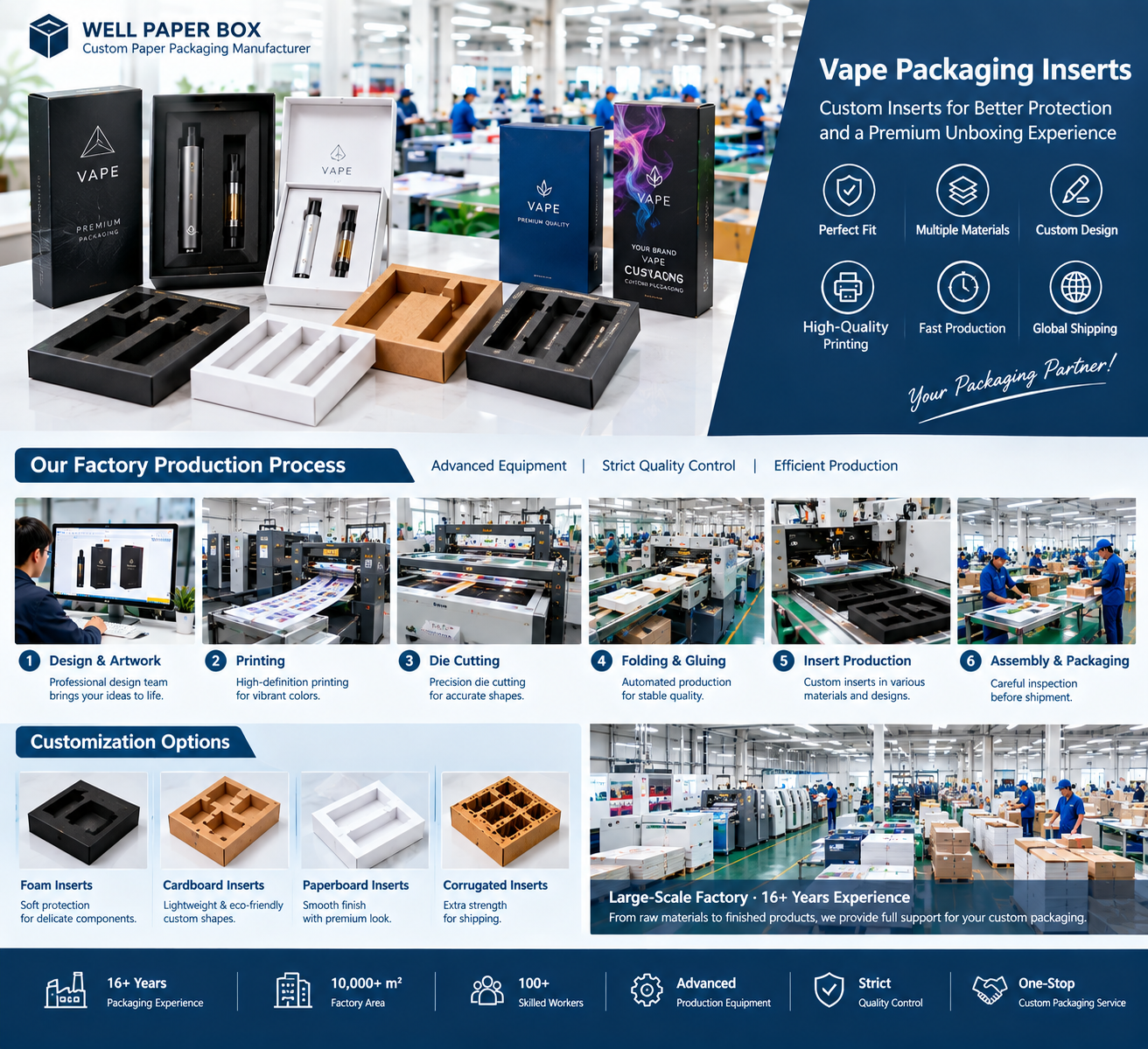
Working with an experienced packaging manufacturer helps turn an initial concept into a production-ready design.
Step 1: Share Your Product Specifications
Provide the product dimensions, weight, quantity per box, packaging purpose, and preferred material. Product samples or reference drawings can help clarify the requirements.
Step 2: Develop the Insert Structure
The design team creates a layout based on the component arrangement and outer box dimensions. Important considerations include cavity size, material thickness, support points, and ease of assembly.
Step 3: Confirm the Artwork and Sample
Review the insert layout and outer box artwork before production. A physical sample or prototype is recommended for checking fit, appearance, and packing efficiency.
Step 4: Begin Production and Quality Inspection
After approval, the insert and outer packaging can move into production. Quality checks should cover dimensions, cutting accuracy, material consistency, print quality where applicable, and assembly.
Step 5: Pack and Arrange Delivery
The final packaging components are prepared according to the agreed shipping and packing requirements. For international orders, confirm carton dimensions, quantities, lead times, and shipping arrangements in advance.
WellPaperBox focuses on customized paper packaging and box manufacturing. Its website presents packaging capabilities including custom dimensions, printing, die-cutting, finishing, sampling, and coordinated packaging services. These capabilities can help businesses develop outer boxes and compatible paper inserts as part of one packaging project.
One-Stop Custom Packaging Solutions
Instead of sourcing the outer box and paper insert separately, buyers can discuss both components within a coordinated project. This helps align the internal structure, box dimensions, artwork, and overall presentation.
Flexible Design and Material Options
Custom packaging can be developed around your product dimensions, preferred paper materials, brand colors, and functional requirements.
Options may include custom-cut paperboard inserts, folded trays, printed boxes, and premium surface finishes, subject to the selected structure and production specifications.
Professional Production and Quality Control
WellPaperBox lists equipment including Heidelberg printing machines, UV printing equipment, automatic die-cutting machines, folding equipment, and automatic gluing machines. These capabilities support different stages of custom paper box production.
For project-specific requirements, discuss sampling, quality inspection, production schedules, and material specifications with the team.
Explore the company's packaging solutions at https://www.wellpaperbox.com/.
Vape packaging inserts are an essential part of a well-designed packaging system. The right insert can improve product positioning, support protection during transportation, organize multiple components, and create a more professional presentation.
By evaluating material options, product dimensions, structural design, and production requirements, brands can develop packaging that balances function, appearance, and cost.
If you are looking for a custom packaging manufacturer to develop paper boxes and matching inserts, contact WellPaperBox to discuss your specifications and explore a packaging solution tailored to your business.
Cardboard and paperboard are suitable for many lightweight products and paper-based packaging projects. Foam may be preferable when specific cushioning or close-fitting cavities are required. The best option depends on product weight, fragility, budget, and sustainability goals.
Yes. Custom inserts can be developed according to product dimensions, component quantities, box structure, material preferences, and required compartment layouts. Prototype testing is recommended before mass production.
Yes. You can discuss the outer box and internal paper insert as one coordinated project. This helps ensure compatible dimensions, consistent branding, and a more efficient packing arrangement.
Start with accurate product measurements, simplify unnecessary compartments, choose materials that meet your protection requirements, and coordinate the insert with the outer box. Request a quotation based on your specifications and order quantity to compare suitable options.
Prepare the product dimensions and weight, insert material preference, outer box size, compartment layout, estimated order quantity, printing requirements, delivery destination, and target delivery date. Reference images or a physical sample can help the manufacturer evaluate the project.
Post time: Oct-12-2026