

Why is paper-based structure an important development direction for Sustainable Pre-Roll Packaging?
As the packaging industry increasingly emphasizes material utilization efficiency and waste management, Sustainable Pre-Roll Packaging has become a direction worth considering for pre-roll cigarette brands when developing packaging products. Traditional pre-roll packaging may use plastic tubes, multi-layer composite materials, or combinations of various materials, although different solutions can meet specific protection needs, but there may be certain limitations in recycling processing, material separation, and resource utilization.
Paper-based packaging provides another design idea for enterprises. By choosing the appropriate cardboard, optimizing the box structure, and reducing unnecessary material combinations, brands can achieve a balance between product protection, transportation efficiency, and packaging appearance. However, paper-based packaging does not mean natural environmental friendliness, nor can it automatically meet moisture-proof, odor-blocking, or child safety requirements. Therefore, enterprises need to formulate more reasonable packaging solutions based on material characteristics, structural functions, and the final usage environment.
Selection of Recycled Cardboard and Natural Cardboard
Cardboard is one of the commonly used materials for paper-based pre-roll cigarette packaging. Recycled cardboard is produced using recycled fibers, which can reduce reliance on virgin fibers and is suitable for some outer boxes that focus on recycling. However, its color, surface flatness, stiffness, and printing effect may vary depending on the source of fibers and production processes.
Natural fiber cardboard can provide different grades of whiteness, surface quality, and structural performance, suitable for packaging with high requirements for brand printing and appearance consistency. Enterprises can choose paper with traceable sources or relevant certifications based on product positioning, budget, and target market.
Differences in the Application of White Cardboard, Kraft Paper, and Corrugated Paper
Different paper materials are suitable for different packaging needs. White cardboard has a relatively flat surface, suitable for color printing, brand logos, and fine patterns; Kraft paper has a natural fiber texture, suitable for minimalist packaging; Corrugated paper has certain buffering capabilities and is more suitable for outer packaging that requires additional transportation protection.
For single or multiple pre-roll cigarette retail boxes, white cardboard and appropriate weight cardboard are usually more convenient for making compact folding boxes. If the packaging needs to withstand large transportation pressure, further evaluation can be conducted on thickened cardboard, strengthened folding edges, or independent transportation outer boxes instead of simply increasing the material usage of all packaging components.
Folding Paper Box Structure and Rigid Paper Box Structure
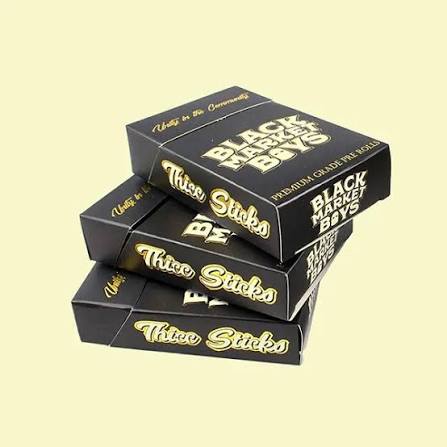
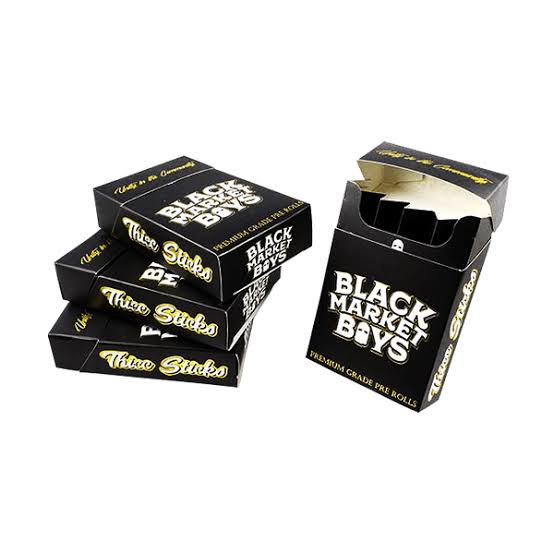
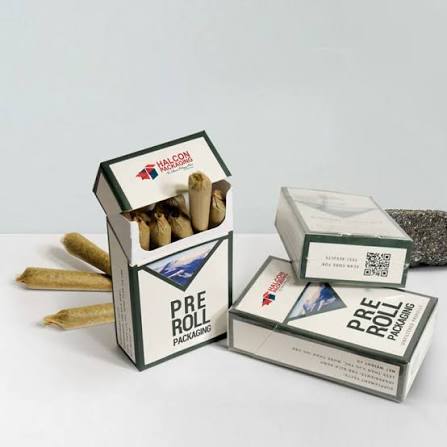
Folding paper boxes have the characteristics of flat transportation, small storage space occupation, and suitability for batch printing, suitable for various retail packaging scenarios. Through tongue insertion, bottom locking, or other folding methods, a box body meeting the product size requirements can be formed while controlling the material usage.
Rigid paper boxes usually have stronger structural support capabilities and are suitable for products requiring higher compressive performance or a more delicate opening experience. However, they may require more cardboard,裱 paper, and processing procedures, so they may not be the best solution for all pre-roll cigarette products.
When choosing the structure, factors such as product quantity, single product size, retail display method, transportation distance, and unit packaging cost should be considered. The reasonable design goal is to use sufficient materials to meet actual functions, rather than blindly pursuing thickness or complex box shapes.
Paper Liners and Partition Structures
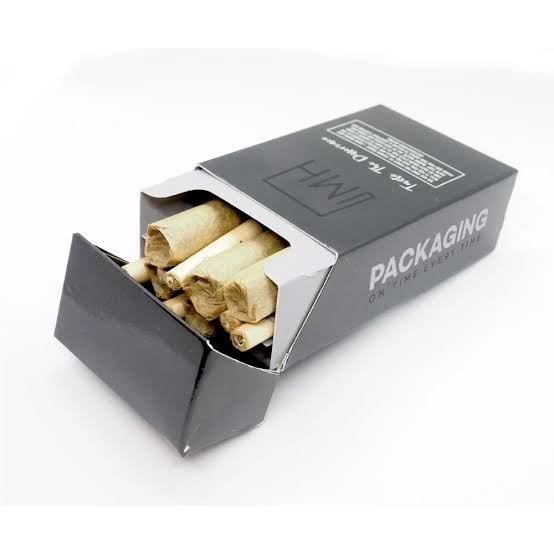
When a packaging box needs to accommodate multiple products, internal positioning structures can reduce the situation of products colliding or moving during transportation. Enterprises can evaluate paper liners, folded dividers, or integrated cardboard structures based on product diameter, length, and arrangement.
Compared with simply adding plastic trays, using the appropriate paper liners offers the opportunity to reduce the combination of different materials, making the packaging more convenient for classification and disposal. However, the paper trays must undergo size and strength tests to ensure they do not lose their supporting effect due to transportation vibrations, compression, or repeated handling.
Select coatings based on actual protection requirements
Paper has a certain degree of hygroscopicity, and environmental humidity may affect the rigidity, dimensional stability, and printing surface of the carton. Therefore, when enterprises choose paper-based packaging, they need to consider the storage environment, transportation conditions, and the humidity sensitivity of the product.
Water-based coatings, applicable barrier coatings, and other surface treatment methods can be used to improve the specific performance of the paper, but their environmental performance needs to be evaluated in combination with the actual material composition, usage amount, and local recycling facilities. Some coatings or composite structures may affect fiber recycling, so it cannot be determined solely based on the coating name its sustainability.
For products requiring higher moisture-proof or odor barrier capabilities, suppliers should evaluate feasible structures based on specific requirements and verify the effect through appropriate tests. When the outer box mainly assumes display and structural protection functions, the inner packaging scheme can also be evaluated separately as needed to avoid the outer box undertaking protection tasks beyond the material capacity.
Balancing printing process and material recyclability
Printing is an important part of customizing paper boxes, but processes such as ink, coating, hot stamping, and composite materials may affect the material composition and subsequent processing methods of the packaging. Brands can prioritize evaluating the necessary processes for visual needs and reducing decorative layers with no practical functional value.
For example, simple color printing, applicable water-based surface treatment, and evaluated paper combinations can help enterprises control the complexity of materials. If coating, metallic effects, or special coatings are to be used, the impact on recycling processing should be confirmed with the supplier in advance, and the relevant environmental claims should be verified for basis.
Comprehensive assessment from material source to final disposal
Whether packaging is sustainable cannot be judged merely by words such as "paper", "recyclable", or "environmentally friendly materials". Enterprises should consider the source of raw materials, production processing, transportation volume, actual service life, and disposal conditions after waste.
For example, using recycled cardboard may reduce reliance on virgin fibers, but the specific environmental impact still depends on the production process and supply chain conditions of the cardboard. Using recyclable design does not mean the packaging can be effectively recycled in all regions, as local recycling facilities, coatings, and the degree of material mixture will affect the final result.
Purchasers can request suppliers to provide material specifications, relevant certification documents, and applicable recycling instructions, and evaluate the packaging solution based on the requirements of the target sales region. For regulated products involving child safety, safety tests and certifications applicable to the product should also be included in the development process, and safety verification cannot be replaced by environmental materials.
Reducing material waste through structural optimization
Structural design is an important aspect for improving the efficiency of packaging material utilization. Reasonable box dimensions can reduce unnecessary gaps, optimizing die-cutting layout helps improve paper utilization, and uniforming some packaging dimensions can simplify procurement and production management.
Enterprises can evaluate from three aspects: first, whether the box matches the product size; second, whether the inner liner and outer box provide repeated protection; third, whether the transportation outer box can efficiently utilize space. By conducting sample and transportation tests to verify the design effect, it is more practical and valuable than relying solely on material promotion.
Focus on verifying materials, processing capacity and quality control
When choosing a supplier, the purchaser should clearly specify the type of cardboard, material weight, box size, printing requirements, surface treatment and order quantity. For products with special protection needs, specific requirements regarding moisture protection, barrier, closure method or child safety should also be stated.
Before determining the mass production, it is recommended to first check the structural stability, folding accuracy, printing color, inner tray compatibility and packaging assembly efficiency of the samples. If the product needs to meet specific market regulations or test standards, it is necessary to confirm whether the supplier can provide corresponding material documents, test data or compliance support.
WellPaperBox can plan the selection of cardboard, box design, brand printing and related processing schemes for the purchaser based on their customized packaging requirements. The specific materials, surface treatment, production capacity and certification support should be confirmed with the supplier according to the actual product requirements.
Determine the final solution through sample and cost analysis
The price differences of different cardboard and structures usually do not only come from the materials themselves, but are also affected by factors such as die cutting complexity, printing color, surface treatment, order size and transportation method. The purchaser should compare the complete unit packaging cost instead of just comparing the paper price per unit.
It is recommended to make samples before mass production to verify the size of the carton, closure effect, protection performance and actual usage experience, and make a comprehensive judgment by combining quotations, delivery cycles and quality requirements. By conducting small-scale tests to determine suitable materials and structures, risks such as design modifications, production rework and unnecessary material consumption can be reduced.
The key to Sustainable Pre-Roll Packaging lies in selecting the appropriate cardboard materials based on actual needs, designing applicable box structure, and properly handling the relationship between moisture protection, barrier, printing and recycling. Recycled cardboard, virgin fiber cardboard, folding cartons and paper inner trays each have their applicable scenarios, and no single material or structure can meet the needs of all products.
For enterprises that wish to develop sustainable pre-rolled cigarette packaging, it is recommended to start with product size, protection requirements, target market and material handling conditions, complete the scheme evaluation and sample testing, and then enter mass production. Through more precise material selection, reducing unnecessary packaging components and improving supplier quality management, the brand can gradually establish a paper-based packaging solution that balances packaging function, production efficiency and environmental considerations.
Common materials include recycled paperboard, responsibly sourced paperboard, kraft paper, and other recyclable paper-based materials.
Folding cartons, rigid paper boxes, and paper inserts are common options, depending on product dimensions, protection needs, and budget.
Yes, selected coatings and barrier treatments can improve moisture resistance. Their performance and impact on recyclability should be evaluated before production.
Compare material options, structural design, printing capabilities, quality control, customization services, certifications, and total packaging costs.
Post time: Oct-14-2026